Life... so much is wrapped up in that little 4-letter word...
Right now life is a wee bit crazy.... but then again isn't it always :)
This summer, so far, has been one of new experiences and a renewal of old ones-
Two days after school was let out for the summer I started work as a nanny. I watch 3 kids ages 6,4, and 2 for 20 hours a week. I think that this job has been God's way of showing me that I need to take life 1 day, 1 hour, 1 moment, 1 step at a time and that we need to focus on Him and not get caught up in trying to plan our lives out the way we want it to look... especially since He is going to work it out His way no matter what :) This promise that He gives us is the reason we can follow his command to not have any worry....
On June 11th, 5 of my friends and I participated in the Sawtooth Relay, a 61.9 miles relay race in which each runner runs about 10 miles that is split up into 2 "legs". In the middle of these 62 miles is Galena Summit which caps out at almost 9,000 ft. I ran ok and our team ended up getting 3rd in the Co-ed open division. The super cool thing this year was the amazing support team we had... 3 vehicles and 17 awesome people.
The next week was the start of summer school... I am trying to finish up all my Junior-year classes so that I will have a "clean slate" going into my senior year. These include: advanced math, Physics, and Ethics.
I had 2 big track meets on the 17th and the 25th. I ran the 800m at both meets and the 200om steeplechase on the 25th. I had never attempted the steeplechase and it was an amazingly fun experience =). I was able, with God's amazing strength to decrease my 800m time by a half-second!
Other things that are keeping me busy this summer:
Gardening
Piano
Reading (German and English :))
Housework
This past year has been one of intense spiritual growth for me as well as a chance for me to find out who I really am, who I want to be and who I want to become! As I am looking down the road to this next year that will be filled with much decision making it is easy for me to become overwhelmed; however, God is trying to help me understand that life is lived "one step at a time" even if they are baby steps :)
Monday, June 27, 2011

Saturday, June 25, 2011
Happy Anniversary, Dad and Mom!
On Monday my parents will celebrate 30 years of marriage. That's right, 30 years. I realize as I type this out that not many children have the opportunity to see their parents' marriage survive 30 years. If I were to make a list of blessings, at the top of it would be thankfulness for my family - and my parents' marriage.
I remember as a little girl looking at the pictures from their wedding. They sat on my Mom's hope chest in our living room. As a starry-eyed dreamer I pretend like I was there at the wedding, watching the beginning of our family as we know it. Who could have guessed that from the covenant of two people made on a bright day in June, 30 years ago, would come 7 children, several businesses and ministries, articles, conferences, a Christian school, a book on Father-Daughter relationships. And...the list could go on.
How can one measure the impact of 2 lives, a marriage, and a family? How can one reduce all the love, discipline, nurturing, education, disagreements, dreams, and hugs of the last 30 years to words you'll read on your screen?
It's an impossible task, because it's bigger than life.
David and Jannyce and their family have embraced a vision and calling bigger than life itself. The good news of the gospel of Jesus Christ has transformed each of them into passionate lovers of His Word, and the relevance of His truth to our lives today. Reflecting on the impact of my parent's 30 years of love in my own life, I think that's the best way to measure what they have - by measuring those around them. I can't count the number of lives that they've impacted. They've not only faithfully guided 7 children, they've been true friends to many, a faithful example to the faint of heart, an encouragement to the weary. The door to their home has been open to people in abuse, the destitute, the broken hearted. My parents are people who drop whatever they are doing to drive 3 1/2 hours to cry with friends who have just lost their child. They care so much about their children's children that they unflinchingly testify in public places to the truth. Over the last 30 years they have mentored, encouraged, and challenged young people who are now leaders and world changers.
Their marriage is more than simply a testimony, it is a legacy. In our world what my parents have is something that makes people pause and say, "Wow - see what God has done!" And, that my friends, is exactly what 30 years of marriage should look like.
In order to celebrate this milestone as much as possible, we're asking anyone who would like to send congratulations, well wishes and memories, please leave a comment here, or send me an email at elysseb@gmail.com. We are planning to compile these memories and give them to my parents in a few weeks. We know they'll appreciate it.
I remember as a little girl looking at the pictures from their wedding. They sat on my Mom's hope chest in our living room. As a starry-eyed dreamer I pretend like I was there at the wedding, watching the beginning of our family as we know it. Who could have guessed that from the covenant of two people made on a bright day in June, 30 years ago, would come 7 children, several businesses and ministries, articles, conferences, a Christian school, a book on Father-Daughter relationships. And...the list could go on.
How can one measure the impact of 2 lives, a marriage, and a family? How can one reduce all the love, discipline, nurturing, education, disagreements, dreams, and hugs of the last 30 years to words you'll read on your screen?
It's an impossible task, because it's bigger than life.
David and Jannyce and their family have embraced a vision and calling bigger than life itself. The good news of the gospel of Jesus Christ has transformed each of them into passionate lovers of His Word, and the relevance of His truth to our lives today. Reflecting on the impact of my parent's 30 years of love in my own life, I think that's the best way to measure what they have - by measuring those around them. I can't count the number of lives that they've impacted. They've not only faithfully guided 7 children, they've been true friends to many, a faithful example to the faint of heart, an encouragement to the weary. The door to their home has been open to people in abuse, the destitute, the broken hearted. My parents are people who drop whatever they are doing to drive 3 1/2 hours to cry with friends who have just lost their child. They care so much about their children's children that they unflinchingly testify in public places to the truth. Over the last 30 years they have mentored, encouraged, and challenged young people who are now leaders and world changers.
Their marriage is more than simply a testimony, it is a legacy. In our world what my parents have is something that makes people pause and say, "Wow - see what God has done!" And, that my friends, is exactly what 30 years of marriage should look like.
In order to celebrate this milestone as much as possible, we're asking anyone who would like to send congratulations, well wishes and memories, please leave a comment here, or send me an email at elysseb@gmail.com. We are planning to compile these memories and give them to my parents in a few weeks. We know they'll appreciate it.
Sunday, June 12, 2011
Daily Bible Reading: June 13 - 19
Biblical Worldview Learning Center Friends:
Recently we added several new e-mail addresses to our list of those receiving this daily
devotional. If you are one of the recent new additions, let me welcome you to our reading
through God’s Word. This daily devotional is designed to take you through the Word of God
in three years. In doing so, we read and consider about 28 verses each day. Our focus is to
provide a devotional that will be helpful for families and young people, though we often receive
comments from adults that are blessed with our thoughts and insights.
In this week's readings, we are completing the Book of Leviticus and beginning our second New
Testament book, the Gospel of Mark. I trust that what you read here will be a blessing to you
and your family.
If you know of others that may be blessed with these daily devotionals by e-mail, please share
their e-mail addresses with us or have them contact us directly. These devotionals go to people
all around the United States and even to several individuals and groups in foreign countries. We
would be happy to add your friends and family members as well.
As we do each month, we offer some helpful materials at a special discounted price. You can
read of these materials at the end of this e-mail. They will make a nice gift to another or a great
addition to your own personal library and study.
May God bless you and your family this week,
David Barrett, Director
Biblical Worldview Learning Center
david@biblicalview.com
208-377-2385
Date: June 13
Reading: Leviticus 26:1-20
Chapter 26 of Leviticus is a very interesting chapter because in it God details the blessings
Israel will receive for walking in obedience to His statutes and the cursing they will receive if
they refuse to obey. In your reading today, you read only 20 verses. Of those twenty verses,
11 addressed the blessings for obedience and 7 addressed the cursing for disobedience. One of
the interesting things about this chapter is that so many of the remaining verses will speak to the
cursing for disobedience. God’s displeasure for unfaithfulness is made abundantly clear.
Another interesting thing about this chapter is that it begins with an emphasis on two
commandments. In these two commandments, so much of what God requires of us is
summarized.
First is the commandment against idolatrous worship. In this command to not make a graven
image and bow down to it, God instructs Israel, and us, that we are to worship Him according to
His instructions and not by any means we may fabricate of our own.
In the second commandment of this passage, God tells Israel to keep His Sabbaths. This word
is plural and includes more than just the weekly Sabbath. It includes the seven year and the
jubilee Sabbaths we were told about in the previous chapter. Israel of the Old Testament was
a special nation brought forth by God for the special purpose of showing forth in the natural
His redemptive nature that is also a spiritual reality. The Sabbaths were a continual testimony
of God’s gracious deliverance from the bondage of sin. It was a grievous thing to not keep the
Lord’s Sabbaths.
We, too, should take note of our relationship to God in these areas. Do we worship God as
He desires, or do we worship God only when and how it is pleasing to us? Do we honor His
Sabbath and rest from our earthly labors and find our true rest in Him? These are important
questions we will learn more about as we continue our study through God’s Word. Pray for
God’s enlightenment on what He instructs us in His Word.
Date: June 14
Reading: Leviticus 26:21-46
Today we continue the reading of the curses God declares He will bring on Israel if they do not
heed his commandments and statutes and follow them. As I mentioned yesterday, there are an
abundance of verses that speak of the curses God will bring for disobedience. Now that you
have finished this chapter you will see that 11 verses spoke of blessings for obedience and 26
verses spoke of the curses. I mentioned yesterday that this should bring to our minds the great
displeasure God has for sin in our lives. However, we should not mistakenly believe that God
punishes more than He blesses. When God blesses for obedience, and even just out of His good
pleasure, His blessings far exceed the curses and punishments He has meted out.
Though God at times uses natural disasters, situations, angry nations, and other means to punish
those people who have been taught of His ways and at one time walked in agreement with His
Word and now have turned away, He will bless those same people far beyond their punishment
should they repent of their sins.
In our individual lives, God operates in much the same way. His "wake-up" calls, though
painful, never exceed the blessing in our lives as we turn back to Him.
Date: June 15
Reading: Leviticus 27:1-34
This last chapter of Leviticus addresses acts of devotion and commitment on the part of the
Israelites. At different times in people's lives they may feel the desire to commit themselves
or part of their possessions for full-time service to the Lord. In Old Testament Israel, this was
shown be committing yourself to the service of the priests and the tabernacle. It could also be shown by giving a portion of your field or an animal to the priest as well.
For some people, this commitment was only for a short time. So, at whatever point the person
determined to end his commitment, there was a fee or redemption that was required to be paid.
This helped make the commitment of a more serious nature because a person could not simply
walk away from his vow to serve the Lord.
Today, you and I can consider the extent of our commitment to the Lord's service. Not everyone
is called to give all of their time to a work of the church, but all of us are called to give some of
our time. You should pray for God to show you how He desires you to use your time for His
Kingdom both now and when you are older.
Date: June 16
Reading: Mark 1:1-22
Congratulations on your Bible reading diligence. You have just finished the Old Testament
Book of Leviticus (the third Book of Moses) and now have begun the second book of the New
Testament – the Gospel of Mark. By gospel, we mean that they are books that focus exclusively
on the life and message of Jesus Christ. They are like biographies of Jesus.
There are four gospels in the New Testament. They are Matthew, Mark, Luke, and John.
The first three (Matthew, Mark, and Luke) are called "Synoptic Gospels." Synoptic literally
means "seen together." Matthew, Mark and Luke are written in a very similar manner, in that
they walk through the life of Christ, tell similar stories from His life, and even use similar
wording.
In these early verses, Mark declares His position outright, "Jesus Christ, the Son of God." From
there, he quickly tells of the ministry of John the Baptist and moves the gospel story along to
the life and ministry of Jesus Christ, the main figure of his writing. As you read each one of
the gospels, even the synoptic gospels, you will see how each has its own uniqueness. Though
Matthew, Mark and Luke bear the title, "The Synoptic Gospels" because of their similarity, they
also are marked with their own distinctness and differences. This is all a testimony to how the
Holy Spirit maintained the personalities, characteristics and qualities of each of the writers of
Scripture yet guarded the accuracy of all that was written.
Pray that God would use this second Gospel writing to further your understanding of Jesus
Christ.
Date: June 17
Reading: Mark 1:23-45
Today's reading picks up with Jesus ministering in the synagogue in Capernaum. After
astonishing the people with His teachings, a man with an unclean spirit began to cry out. The
spirit, or devil, inside the man knew who Jesus was and made it known. He said, "I know thee who thou art, the Holy One of God."
Jesus Christ is the Son of the Only, Living and True God. All creation knows Who He is. The
spiritual realm, both good and righteous angels and devils know Who He is. But, to be saved,
you have to know more than just Who Jesus is. He must be the one on Whom you believe and
trust for the forgiveness of your sins. This is what the devils will never do, though they know
Who Jesus is.
Jesus, as God the Son, has complete mastery over all creation, including the actions of devils.
Jesus demonstrated this by rebuking the devil, silencing him and casting him out of the man.
Jesus demonstrated to those around Him that He was the ruler of all things.
Date: June 18
Reading: Mark 2:1-28
Chapter 2 of the Book of Mark has 4 great stories from which we can learn. This time through
we will look at the first two. These are the stories of Jesus healing the man with palsy and the
astonishment of the scribes and Pharisees when they see Jesus eating with sinners.
The story of the man with palsy brings out two important facts. First we see Jesus moved
because of the faith of those who brought the man to Him. We must remember that Jesus is
capable of healing whomever He will and whenever He will. However, typically, Jesus moves in
the lives of those who come to Him in faith that He can and will work in their lives, whether it is
for personal healing or some other need. Anytime we have a need, we should seek God, in faith,
for our answers.
Secondly, this story is used to bring out the divinity of Christ. The word divinity refers to Jesus
being God. When Jesus first spoke to heal the man, He said, "Son, thy sins be forgiven thee."
That statement really made the scribes that were present very angry. Only God can forgive
sins, they said to themselves. And, they were right. Jesus, in order to demonstrate His divinity
(that He is God), then said what I consider a most profound statement. In one sentence He both
asserts His authority to forgive sins and He demonstrates His power to heal. Read again what
Jesus told these scribes, "But that ye may know that the Son of man hath power on earth to
forgive sins, I say unto thee, Arise, and take up thy bed, and go thy way into thine house" (vss.
10-11). And, the man did just that.
Finally, we will take a look at verses 15-17. Here is the story of Jesus having a meal at the house
of Levi the tax collector. Tax collectors of that time were especially known for their dishonesty.
And, here is Jesus sitting in the house of one of those notorious, government-sanctioned thieves,
eating with him and other noted sinners. The scribes and Pharisees can’t understand how Jesus
could ever associate with such a crowd.
We need to pay close attention to the answer Jesus gives them. Read again what He says in
verse 17. "They that are whole have no need of the physician, but they that are sick: I came not
to call the righteous, but sinners to repentance." These sinners we are told "followed him" (see the end of verse 15). They wanted what Jesus had to offer because they knew they were sinners,they knew they were sick.
The Pharisees believed they were well and that they were righteous. They did not want what
Jesus had to offer. They did not see themselves as having any need of Jesus or His gospel. They
are the one's Jesus was referring to as the "whole" and the "righteous". He wasn't saying that
they were actually that way. He was saying that they thought they were.
We need to recognize our own state of being sick and trapped in sin and needing the Great
Physician Jesus Christ just as Levi the Tax Collector and the sinners that came to eat with Jesus
at his house.
Date: June 19
Reading: Mark 3:1-35
In Mark chapter 3, Jesus chooses His 12 close disciples. They are named in verses 16-19.
In the process of naming the disciples, Mark gives us some insight into the character of some of
these followers. For example, we are told that Jesus called the sons of Zebedee, James and John,
the sons of thunder. And, of course, there is Judas Iscariot, who is already identified as the one
who betrayed Jesus.
Having called these twelve, Mark tells us that Jesus "ordained" them, "that they should be
with him, and that he might send them forth to preach." Jesus, also, gave them power to heal
sickness and cast out devils. We will see that this came to pass in their lives.
Jesus, as you have read, was already performing such miracles and such events attract
crowds. And, there were large crowds coming to Jesus. In the last chapter we read how so many
people pressed into a house where Jesus was that no one else could get in. So, the men trying
to get a sick friend to Jesus went on the roof and let the man down through a hole they made.
In this chapter, we read that so many people came to Jesus by the sea shore that He had to use
a small boat to go out into the water to speak to them (see verse 9). Also, there were so many
people pressing into the house where Jesus was meeting with his 12 disciples that no one could
sit to eat.
Yes, people get excited when miracles start happening, and they should. However, not
everyone was overjoyed by Jesus' popularity. Jesus' friends and family members think He
is "beside Himself" to put up with all these people. And, the scribes, Pharisees, and Herodians
are so upset, that they are plotting ways to destroy Jesus (see verse 6).
Jesus came to show us God's truth and love. However, in doing that He exposed the
fallacies of what the religious leaders of His day were teaching. He corrected their teachings
on the Sabbath, and even declared Himself to be "Lord of the Sabbath"(see Mark 2:28). He
has demonstrated His divinity by forgiving sins and healing. All this is more than the scribes,
Pharisees, and other leaders can tolerate.
We may not be troubled with the teachings of Scripture in the same way the scribes and
Pharisees were, but there will be things taught that will make us uncomfortable and challenge us.
We always need to pray that God would give us a teachable heart and that we would not respond
with a haughty heart and an un-teachable spirit.
Monday, June 6, 2011
June 6-12 Daily Bible Reading
Biblical Worldview Learning Center Friends:
We continue in the book of Leviticus this week. There are some interesting aspects of the worship
and community life in Israel that is covered in these passages. Additionally, we will find some practical
application of these things to our lives today.
Remember our book specials for this month. They will make a great gift for others or study books for
yourself. Details are at the end of this e-mail.
Blessings in the Lord,
David Barrett, Director
Biblical Worldview Learning Center
david@biblicalview.com
208-377-2367
Date: June 6
Reading: Leviticus 21:1-24
Chapter 21 of Leviticus contains God's instruction through Moses concerning some specific things
about the priests. Remember the priests of Israel came from the children of Aaron. So, this was told
to "the priests the sons of Aaron" as it mentions in verse 1.
Some of the restrictions mentioned here were also placed upon all the people of Israel. For example,
no Israelite was to make cuttings or engravings on his skin. These were practices of worship among the
pagan nations. But, some of the restrictions mentioned here are specific for the priests. We see this in
the very first of the chapter when a priest is not allowed to take care of a dead person except for a very
close family member. If the priest had the anointing oil upon him so he could enter the sanctuary of the
tabernacle, he could not even take care of his dead mother or father.
These restrictions may sound strange to us, but we must remember that God was placing a special high
calling upon the priests in Israel and, with a greater responsibility before God, there comes a greater
restriction on a person’s life. Today, a minister of God may not specifically face these restrictions
because he no longer fulfills the "High Priest" role that is held by Jesus Christ, but his life is so dedicated
to the Lord that he does face greater restrictions than the common believer. He must consider his
life, not only as an example to the world, but an example to those who attend the church in which he
ministers.
All who follow Jesus Christ are to live lives of Godliness and to avoid any appearance of evil. Those who
enter a clearly identifiable role of ministering the Word of God have an even greater responsibility to
see that their life appears unblemished to the world and to their fellow Christian believers.
Date: June 7
Reading: Leviticus 22:1-33
One of the things stressed by the Lord in this chapter to the priests and children of Israel is, "When
you worship the Lord, things must be perfect." The priest cannot participate if he has a blemish and the
sacrifice brought must not have a blemish either. If either participant does have a blemish, then the
Lord will not accept the sacrifice. In fact, the priest could even be cut off from the presence of the Lord.
Every time a sacrifice was brought, both the sacrifice and the priest had to be examined. It was not only
a matter of the acceptance of the sacrifice, but it could be a matter of life and death for the priest. Only
that which was perfect and done in obedience to God’s commands would be acceptable to the Lord.
All this stressed the holiness and perfection of God and His intolerance for sin. It was also a picture of
the perfect priest and perfect sacrifice that was needed for the true forgiveness of all sin. That priest
and sacrifice was found in Jesus Christ.
Date: June 8
Reading: Leviticus 23:1-22
Leviticus chapter 23 begins listing the major feasts of Israel. In your reading today, you read about
the Passover and Feast of Unleavened Bread, the Feast of the First Fruits, and the Feast of Weeks. Each
time you read through this section we will address one of these feasts. Today, let's reflect once again on
the feast you are probably most familiar with and that is the Passover and Feast of Unleavened Bread.
The Passover is always linked to the seven day feast called the Feast of Unleavened Bread. The evening
before the Feast of Unleavened Bread begins, the children of Israel would celebrate the Passover. Can
you remember why it is called the Passover and why it was a Feast of Unleavened Bread? I am sure you
remember back to the miraculous exodus that Israel made from Egypt. The Passover was a reminder
of God's mercy and grace when he passed over their homes and did not destroy the first born of their
families and flocks.
But, why did God pass over the Israelites' homes? It was because of the blood of the Passover lamb
that was on their doorposts. So, the Passover part of this feast served a purpose of remembering what
the Lord had done in the past, but it was also a foreshadow or symbol of what the Lord would do in the
future. In the future, the Lord would provide the perfect Passover in Jesus Christ. The “Lamb of God”
who was killed for our sins.
The seven day Feast of Unleavened Bread which then happened was a feast reminding the Israelites of
two things. First, it reminded them of the haste in which their forefathers were rushed out of Egypt and
did not have a chance to get their bread to rise. Second, it reminded them of the sin they needed to
get out of their lives. In preparation for the Feast of Unleavened Bread, each Israelite household had to
remove all the old leaven from their homes. This was symbolic of the sin that needs to be taken from
our lives.
Each of these feasts were special celebrations in the life of the Israelite. However, of greater
significance, is the fact that each of these feasts points to our need of Jesus Christ and how He has
fulfilled all that God requires for our salvation. Jesus is our Passover and it is He who can rid our hearts
of the leaven of sin.
Date: June 9
Reading: Leviticus 23:22-44
Three more feasts are mentioned in the remainder of Leviticus 23 which you read today. These
feasts are: Feast of Trumpets, Day of Atonement, and the Feast of Tabernacles or Booths. Again we will
focus on the first of these three feasts for our discussion today.
We are told in verse 24 that on the first day of the seventh month the children of Israel are to celebrate
a Sabbath called a holy convocation. This was a special Sabbath separate from the weekly Sabbath day
of rest. This too was a day of rest and no work was to be done on this day other than an offering unto
the Lord.
A unique part of this day was the blowing of the trumpets which are said to be done for a memorial.
That means the blowing of the trumpets was to be a reminder to the people. We are not told exactly
what the reminder was, but so many of the feast pointed back to the Exodus from Egypt and events
connected with it. So, it is likely that this also was to bring an aspect of that back to their memory.
The blowing of the trumpets in Scripture is often connected to the voice of God or a great act of
judgment by God. Because of this, and other reasons, it is believed by some that the memorial was to
the act of God in giving the law on Mount Sinai.
Israel was encouraged through this and other feasts to remember the great acts of God that were a part
of their physical redemption from Egypt. In prayer, meditation, and the reading of God’s Word, we too
should be reminded of the work of God in our lives and in the lives of our families and our nation.
Date: June 10
Reading: Leviticus 24:1-23
Leviticus chapter 24 has three very definite divisions. The first division (verses 1-9) addresses
some priestly functions in the tabernacle. The next division, beginning with verse 10, addresses
the punishment of a public blasphemer in Israel. The final division (verses 17-22) deals with what is
sometimes called the lex talionis. That is, this last division addresses the principle that the punishment
needs to fit the crime. Today, let's look at what we can learn from the first section of this chapter.
Verses 1-9 speak of two aspects of the tabernacle. One is the oil for the lamps and the other is the
bread for the table. The congregation of Israel was to supply what was needed for both of these articles
in the tabernacle. The lamps were to be burning before the Lord continually and the “showbread”, as it
was called, was to be prepared for every Sabbath. The bread for the table was to be made in 12 loaves,
obviously to represent the 12 tribes of Israel.
Each of the things found in the tabernacle are symbolic and represent something in the spiritual
aspect of our relationship with God. In Scripture, oil quite frequently represents the Holy Spirit. The
lamps, continually being lit, represent the light of truth that the Lord provides through the presence of
the Holy Spirit. The 12 loaves represent the "Bread of Life" the Lord provides through His Word.
Today, as we worship the Lord, we should seek His presence in our lives through meditation and
prayer. Our desire should be that the Holy Spirit would indwell us and provide us with the "Light
of Truth" for us to follow each and every day. We are to realize, however, that God’s Spirit works
in conjunction with His Word. So, we are to actively seek to "feed upon the Scriptures." That is, we
should read and meditate upon them regularly so that the Holy Spirit can then bring to our mind an
understanding of God’s Word. In this way, He guides us day by day.
Date: June 11
Reading: Leviticus 25:1-24
The Lord established a very special law for Israel that they were to follow when they entered the
Promised Land. In verse 2 we are told that the Lord instructed Moses to tell the children of Israel
that "when ye come into the land which I give you, then shall the land keep a Sabbath unto the Lord."
Unlike the weekly Sabbath that was given for people to follow, the Sabbath of the land was to occur
every 7 years, instead of every seven days. And it was to last a whole year. The land was to be given rest.
This law has both spiritual and practical aspects to it. On the spiritual side, the people of Israel
were to show their faith in God by following His statute. Also, they would need to trust that the Lord
would take care of them during that year in which the land would lie uncultivated. In verse 21, the Lord
promised that in the sixth year the land would bring forth an abundant harvest that would equal three
years.
On the practical side, this law made the Israelites actually provide a rest for the land that would
rejuvenate it. When land is repeatedly cultivated, planted and harvested, it becomes depleted of
nutrients. However, if the land is allowed to lay fallow (that is the word for leaving land uncultivated) it
replenishes itself during that time period.
Modern farming methods with their extensive use of fertilizers have tried to counteract this
depletion process. However, those practices often result in less productive land and a less nutritious
harvest. Prior to modern farming methods, farmers would often divide their land into plots – usually,
seven. In this way they could not only rotate crops, which helped slow down the nutrient depleting
process, they could also leave one plot fallow each year. In a seven year period, then, they would have
rested their whole farm. This was the practice of George Washington at his Mt. Vernon estate.
God's Word provides wisdom even for the day-to-day tasks of life, like the farming of His earth.
Date: June 12
Reading: Leviticus 25:25-55
God has a special place in his heart for the person who is poor and has fallen on hard times. He
desires for those who follow Him to make special efforts to take care of those who are poor among
them. In fact, the Lord says, even if he is a stranger (foreigner) or someone just passing through, you are
still to treat him with an extra measure of kindness.
If he needs money, you are not to charge him usury. The word usury means interest. In other words,
God says that you should make an "interest free loan" to a poor person. In fact, if they are not able to
pay back what they borrowed, then you should just consider it a gift to them.
For the Israelite, they were to remember that they were a stranger in Egypt and God brought them
out. Because of this, they were to treat the strangers among them, and the poor among them, with
kindness. Today, we should remember that we were once strangers to God and the servants of sin. God,
however, came and rescued us and redeemed us from that bondage. So, we too, should treat those that
are in poverty and have fallen on hard times with kindness. Just as God showed kindness to us.
__________________________________________
June Featured Products
Click on the titles to order.
20% Discount (as Priced)
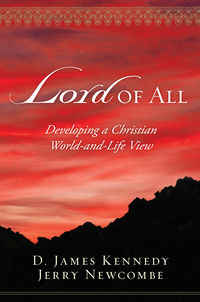
by D. James Kennedy
Retail Price: $18.00
June's price: $14.40
In this book, D. James Kennedy and Jerry Newcombe define the Christian's world-and-life view by considering the six main spheres of influence that Christians should be worlking to strengthen, from the global and national levels down to the church and family. Those with anti-Christian worldviews are working hard to push God out of these spheres,and as Christians we are called to reclaim them for Christ. With an unflinching commitment to God's truth, the authors take us through each of these spheres of influence and give us an overview of what has gone wrong and why a biblically informed world-and-life view is essential. They provide us with the tools and guidance we need to begin integrating our faith with every aspect of life.
320 pages • Hardcover
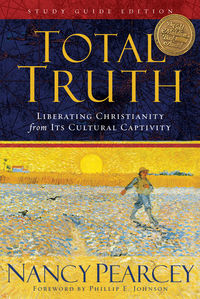
by Nancy Pearcey
Originally $20.00
May's price: $16.00
In college, Pearcey studied under Francis Schaeffer in the Swiss Alps. Descending to the "real world," she began applying a Christian worldview to life in postmodern, post-Christian America. Now she challenges 21st-century believers to overcome our cultural double-mindedness---and learn to "think Christianly" about secular topics, including politics, business, Darwinism, feminism, and materialism.
479 pages • Paperback
__________________________________________
Monday, May 30, 2011
Daily Bible Reading: May 30 - June 5
Biblical Worldview Learning Center Families and Friends:
This week we continue through the middle of the Book of Leviticus. Even though these
Scriptures were written to a people that lived over 3500 years ago, and speak of situations that
they were facing, these writings have great relevance for us today. I hope you see some of that
in what you read and reflect upon this week.
For the month of June, we are offering special discounts on two books that address the
development of a Biblical Worldview.
Lord of All: Developing a Christian World and Life View, by D. James Kennedy. This book
presents a plan for developing a world-and-life view that will equip Christians to live out their
faith in all aspects of life. (Retail: $18.00; Discounted Price: $14.40)
Total Truth: Liberating Christianity from its Cultural Captivity, by Nancy Pearcey. This work
makes a passionate case that Christianity is not just religious truth but truth about all reality,
showing how we can overcome the current divide and recover authentic spirituality. (Retail:
$20.00; Discounted Price: $16.00)
You can find more about these resources after this week's devotionals.
May God richly bless your family,
David Barrett, Director
Biblical Worldview Learning Center
david@biblicalview.com
208-377-2367
Date: May 30
Reading: Leviticus 14:30-57
In this section, the Lord speaks of when the Israelites enter the promised land and a plague of
leprosy is found in a house. There are two things I would like for you to notice.
First, the Lord is teaching the Israelites something they will need to know years from now when
they have more permanent settlements. At this time they are dwelling in tents as they travel in
the wilderness. When they enter Caanan, they will settle down in actual houses. So, the Lord,
in His Providence, teaches them about how to handle the situation they could face of leprosy
actually found in the structure of the house.
Secondly, I want you to notice that this instruction of community health is being given about
1500 years before Christ. These laws of Scripture, which are so advanced in recognizing and
protecting a community from disease, were given at a time when many cultures were completely
trapped in mysticism about illness and plagues. God’s Word taught about disease and that disease can be harboring even in the structures of houses.
God's Word is applicable for all of time. Here we read of the health standards of the Israelite
community. They are perfect guidelines for health standards for us today. Thank the Lord for
His life applicable Word.
Date: May 31
Reading: Leviticus 15:1-3
The last of the laws of cleanliness and sanitation due mostly to illnesses and disease are
given here. Some of these things are kind of hard to read about because they deal with what
some people consider gross or at least distasteful. But these types of things are a matter of life.
People, because of injuries, diseases, or illnesses, and even some natural body functions, have
situations where they have continuous bleeding or the discharge of other fluids from different
places on their body. Each of these situations can end up being disease infecting of others
and God, in His wisdom, set down laws of cleanliness to protect the Israelite community from
spreading disease.
In the practical sense, we should also practice caution when someone is bleeding or has some
infection that is oozing puss or other fluid. Some sports, like basketball, will not allow a player
to continue playing if he is bleeding because of the potential of getting his blood on another
player. We consider this type of a decision as a modern stroke of genius. The truth is, it was the
Biblical wisdom giving by God to Moses over 3500 years ago. The Bible is truly an amazing
Book.
Date: June 1
Reading: Leviticus 16:1-34
Do you remember what happened to Aaron’s sons back in chapter 10 when they
brought "strange fire" before the Lord in the tabernacle? God struck them dead. They
apparently brought incense in to the Lord and attempted to burn it before the Lord. However,
they either did it without properly preparing themselves or in some other way it was done
inappropriately. God, in striking Nadab and Abihu dead for trying to approach Him on their own
terms, made it known that He will be worshipped in the fashion that He alone dictates.
So, here in Leviticus 16, the Lord tells Aaron through Moses how and when He is to be
approached for the type of worship Aaron's sons attempted in chapter 10. In verse 2, the Lord
says Aaron is not to come before Him just any time he wants. This warning is given so that "he
die not." Then, after instructing Aaron in the several sacrifices he is to prepare and do for
himself and for the people, God tells Aaron,
"…put the incense upon the fire before the Lord, that the cloud of the
incense may cover the mercy seat that is upon the testimony, that he
die not."
Again, we see that Aaron must bring the incense before the Lord in a proper way, so that he does
not die like his sons.
Whether Old Testament or New Testament, it is God who determines the manner in which He is
to be worshipped and the avenue through which He is to be approached. It is only through Jesus
Christ that any of us can approach the holy God of the Universe.
Date: June 2
Reading: Leviticus 17:1-16
Israel was surrounded by pagan nations. These nations had a number of practices that were
completely unacceptable to the Lord. For example, they would eat or drink the blood of animals
they sacrificed and they would sacrifice to devils or false gods. Many of these sacrifices to
devils were made in the open fields. So, God disallowed sacrifices made in one’s field. All
sacrifices had to be brought to the tabernacle and presented to the Lord. If they were not, then
they were considered a sacrifice made to a false god.
God knows that it is easy for people to become influenced by those around them. The Israelites
might observe the pagans making their sacrifices to their false gods in their fields. It would be
tempting to the Israelites to look upon this and see how much easier it is to do their sacrifices
in their fields and not have to travel to the tabernacle. At first, the Israelite would have every
intention of still making his sacrifice to the true God of Israel. However, he would have
compromised the command of God to go to the tabernacle. In time, other compromises would be
made, and soon they would be entertaining the idea and even practicing the offering of sacrifices
to false gods.
God set the boundary clear that all sacrifices were to be made at the tabernacle in order to
separate Israel from the pagan nations and to protect the children of Israel from the entrapment of
compromise.
We need to be careful about the choices we make in this life and the steps we take. Are we being
influenced by the world around us? Have we made choices that have taken us away from God
and not brought us closer to Him? Ask God to help you keep your eyes upon Him and what
He desires for your life. Ask Him to protect you from the deadly act of compromising with the
world.
Date: June 3
Reading: Leviticus 18:1-30
Once again God warns against following the practices of those who do not know Him. In
verse 3 of today's reading, the Lord says,
"After the doings of the land of Egypt, where in ye dwelt, shall ye not do:
and after the doings of the land of Canaan, whither I bring you, shall ye
not do: neither shall ye walk in their ordinances."
We are reminded how easy it is to follow the standards and practices of others and not consider
what is commanded by God in His Word. All the horrible practices listed in the remainder of
this chapter were done in Egypt and in Canaan. These would be the things the Israelites would
have observed as "normal" practices. However, they are all abominations in the Lord's eyes.
We will take a closer look at these evil practices the next time we pass through this part of
Leviticus. For now, let's clearly heed the Lord's command that we turn away from the practices
of this world and the world's way of doing things. Let us follow the declaration that the Lord
made to Israel in verse 4 and 5,
"Ye shall do my judgments, and keep mine ordinances, to walk therein:
I am the Lord your God. Ye shall therefore keep my statutes, and my
judgments: which if a man do, he shall live in them: I am the Lord."
Date: June 4
Reading: Leviticus 19:1-37
This chapter is filled with many practical commandments from the Lord that can be
applied to our lives. Some are difficult to understand, but most give us a clear picture of God's
commands and wisdom for life. Because there is so much that can be covered, I will divide the
chapter in thirds and address a third each time we pass through in our reading program. So, this
time looking at Leviticus 19, let's consider the first 12 verses.
In these 12 verses several of the 10 Commandments are reiterated. Can you pick out some of
those commandments? Here are some that I noticed:
5th Commandment – verse 3
4th Commandment – verse 3
2nd Commandment – verse 4
8th Commandment – verse 11
9th Commandment – verse 11
Besides these re-statements of the 10 commandments, there are some other very important
commandments given. In verse 5 we are told that the peace offering was to be offered from an
act of the will. In other words, God desires His people to worship Him freely from the heart and
not have to be commanded. Even in the Old Testament, God was looking for those who had a
heart to worship Him.
Now look at verse 9. Do you understand what the Lord was commanding here? He was saying
that when the fields were harvested, the workers were to leave the corners of the field untouched.
Also, they were not to strip the plants or trees of all their fruit. The reason they would leave
this produce on the plants and in the corners of their fields was to help the poor, the needy, and
the strangers that may need to gather food for themselves. You see, in Israel, they did not have a welfare program set up to be run under the state or national government. Such needs were
handled on the individual and family level. Leaving the fields with fruit that needy people could
harvest was one of the important ways the community helped those in need.
God’s ways are always the best ways. We should look to how we can practically apply God's
Word to our lives and communities. How can this gleaning law be applied in your family or
Church?
Date: June 5
Reading: Leviticus 20:1-27
Again, various laws are stated that are to guide the Israelites in holy living before the Lord.
Some of the laws are re-statements of earlier laws and even of the 10 commandments. Our goal
should be to attempt to understand the laws and endeavor to see how they foreshadow Christ,
recognize the holiness and sovereignty of God, and/or provide practical guidance for our daily
living.
Today, let's focus on verses 1-6 and 22-26. Verses 1-5 speak about the evil of a man giving his
seed to Moloch. Seed used in this sense means children. So a man was not to give his children
to Moloch. Who or what is Moloch? Moloch was a pagan god of the people who were living
in Canaan prior to the Israelites taking possession of the land. The greatest gift you could give
the false god Moloch was the literal sacrifice of your own child. Later in Scripture, when the
Israelites turn away from God, it will say that they caused their children to pass through the fire
of Moloch. What a horrible thing to do.
Verse 6 speaks of turning to wizards and those who speak with familiar spirits. These are people
who we would call witches. They include people who try to contact the spirits of dead people.
Just as God warns the Israelites to stay away from these practices, He is warning us as well.
Verse 23 tells us that all the evil practices of this chapter are the things those living in Canaan
were doing. And God was going to drive them out of the land and give it to the Israelites. God
wanted Israel to know that it was because of these evil practices that He was driving out these
people and giving the land to them. The Israelites were instructed by God to "keep all my
statutes, and all my judgments, and do them: that the land, whither I bring you to dwell therein,
spew you not out" (vs. 22). The sins of a people will cause God to remove them from where
they are. The Lord calls this an act of the land spewing or spitting the people out of the land.
Today, we live among unbelievers that do all kinds of evil. They may not literally burn their
children in fire to a false god, but they cause their children to be taught false ideas and, in that
way, sacrifice their children's hearts and minds to a pagan god.. There are people around us who
worship the dead, speak with demons, and try to contact the dead. As believers, we are called to
a holy life and must separate from all these kinds of practices. We should never follow the ways
of the world, but always seek only to worship the One, True God of Scripture in the way that He
has instructed us.
__________________________________________
June Featured Products
Click on the titles to order.
20% Discount (as Priced)
by D. James Kennedy
Retail Price: $18.00
June's price: $14.40
In this book, D. James Kennedy and Jerry Newcombe define the Christian's world-and-life view by considering the six main spheres of influence that Christians should be worlking to strengthen, from the global and national levels down to the church and family. Those with anti-Christian worldviews are working hard to push God out of these spheres,and as Christians we are called to reclaim them for Christ. With an unflinching commitment to God's truth, the authors take us through each of these spheres of influence and give us an overview of what has gone wrong and why a biblically informed world-and-life view is essential. They provide us with the tools and guidance we need to begin integrating our faith with every aspect of life.
320 pages • Hardcover
by Nancy Pearcey
Originally $20.00
May's price: $16.00
In college, Pearcey studied under Francis Schaeffer in the Swiss Alps. Descending to the "real world," she began applying a Christian worldview to life in postmodern, post-Christian America. Now she challenges 21st-century believers to overcome our cultural double-mindedness---and learn to "think Christianly" about secular topics, including politics, business, Darwinism, feminism, and materialism.
479 pages • Hardcover
__________________________________________
Wednesday, May 11, 2011
NBA Playoffs
The critics have been proven wrong the Lakers were swept the Celtics are out.
The Heats and Bulls are on fire while the Grizzlies, Thunder, Hawks, and Mavericks are still in and playing well.
My prediction at the start of the year was Heat vs. Thunder now I'm undecided on Heat and Bulls but I will stick with the Heat.
GO BULLS!!!!!!
The Heats and Bulls are on fire while the Grizzlies, Thunder, Hawks, and Mavericks are still in and playing well.
My prediction at the start of the year was Heat vs. Thunder now I'm undecided on Heat and Bulls but I will stick with the Heat.
GO BULLS!!!!!!
Thursday, April 7, 2011
Books, books, and more books!
Two years ago, I started a list off all the books I was reading, wanted to read, and wanted to re-read. Since the I have read over 140 books and 40,000+ pages.
Here are some of the best and worst...
Best re-reads:
8. King of the Wind (M. Henry)
7. Roses for Mama (J. Oke)
6.They Called Her Mrs. Doc (J. Oke)
5. Little women Series~ Little Women, Little Men, Jo's Boy's (L. M. Alcott)
4. the Valley of Fear (A. C. Doyle)
3. Pearl Maiden (H. Rider Haggard)
2. Carry On Mr. Bowditch (J. Latham)
1. Wives and Daughters (Elizabeth Gaskell)
Worst re-read:
Too Long a Stranger (J. Oke)
Worst first-time read:
At home in Mitford series(J. Karon)
Best first-reads:
11. Fires of Glennmara sereies (L. Windsor)
10. To Have and To Hold (M. Johnson)
9. In Freedom's Cause (G. A. Henty)
8. Pendragon Cycle and Avalon (S. Lawhead)
7. O' Malley series (D. Henderson)
6. When Dreams Come True (Eric and Leslie Ludy)
5. Our Mutual Friend (C. Dickens)
4. The Vicar of Wakefield (O. Goldsmith)
3. Tales (O. Henry)
2. Glastonbury (D. F. Crow)
1. Hadassah (T. Tenney)
What I am reading right now:
Dominion (R. Alcorn)
Passion and Purity (E. Elliot)
The Inheritance (Alcott)
A Garland for Girls (Alcott)
The Celtic Crusades (Lawhead)
What I am most looking forward to reading:
Deception (Alcorn)
Pilgrim's Progress (Bunyan)
Of Plymouth Plantation (Bradford)
King Raven series (Lawhead)
Here are some of the best and worst...
Best re-reads:
8. King of the Wind (M. Henry)
7. Roses for Mama (J. Oke)
6.They Called Her Mrs. Doc (J. Oke)
5. Little women Series~ Little Women, Little Men, Jo's Boy's (L. M. Alcott)
4. the Valley of Fear (A. C. Doyle)
3. Pearl Maiden (H. Rider Haggard)
2. Carry On Mr. Bowditch (J. Latham)
1. Wives and Daughters (Elizabeth Gaskell)
Worst re-read:
Too Long a Stranger (J. Oke)
Worst first-time read:
At home in Mitford series(J. Karon)
Best first-reads:
11. Fires of Glennmara sereies (L. Windsor)
10. To Have and To Hold (M. Johnson)
9. In Freedom's Cause (G. A. Henty)
8. Pendragon Cycle and Avalon (S. Lawhead)
7. O' Malley series (D. Henderson)
6. When Dreams Come True (Eric and Leslie Ludy)
5. Our Mutual Friend (C. Dickens)
4. The Vicar of Wakefield (O. Goldsmith)
3. Tales (O. Henry)
2. Glastonbury (D. F. Crow)
1. Hadassah (T. Tenney)
What I am reading right now:
Dominion (R. Alcorn)
Passion and Purity (E. Elliot)
The Inheritance (Alcott)
A Garland for Girls (Alcott)
The Celtic Crusades (Lawhead)
What I am most looking forward to reading:
Deception (Alcorn)
Pilgrim's Progress (Bunyan)
Of Plymouth Plantation (Bradford)
King Raven series (Lawhead)
Subscribe to:
Posts (Atom)